|
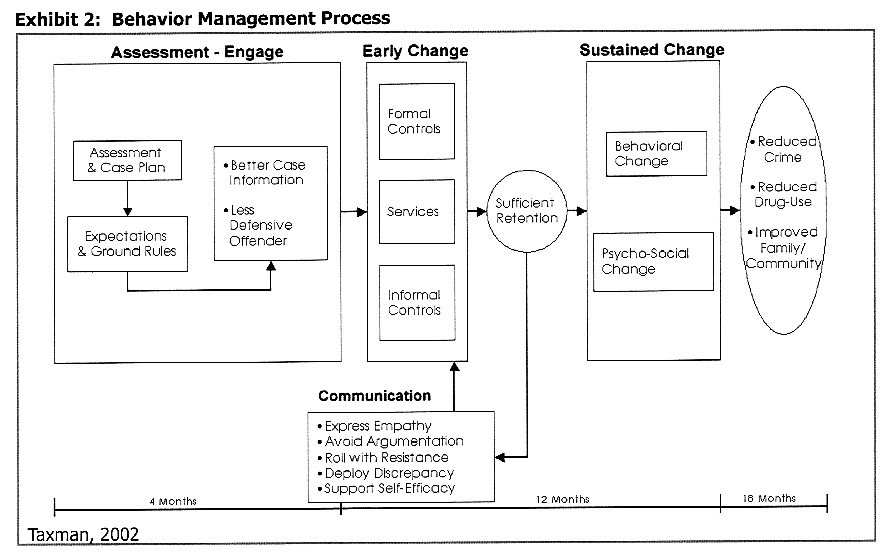
III. Behavior and Change In the behavioral management process, as shown in Exhibit 2, the supervision staff are focused on four objectives:
Within each step, there are key objectives
that lead to the goal of long-term change. The core components of behavior change are produced through a series of interactions that provide the recipient (offender) with the opportunity to learn about his/her behavior and patterns, to acquire new skills to address problematic issues, and to develop the self-maintenance tools to ensure long-term success. The role of supervision staff is to facilitate this change process. It should be clear as well that offenders are responsible and accountable for their own actions, including the willingness to change. Offenders cannot be treated as passive participants whose only hope is to be showered with services, nor misfits incapable of leading productive lives. The behavior management model rejects both of those views. It does not permit supervision staff to stand idly by until offenders are "ready" to change their behavior. Instead, it demands that staff proactively work towards motivating offenders to change and that offenders proactively participate in the change process or face consequences. The first objective for staff is engagement of the offender in the change process. This sets the premise for the offender assuming full responsibility for a pro-social lifestyle. |
|